
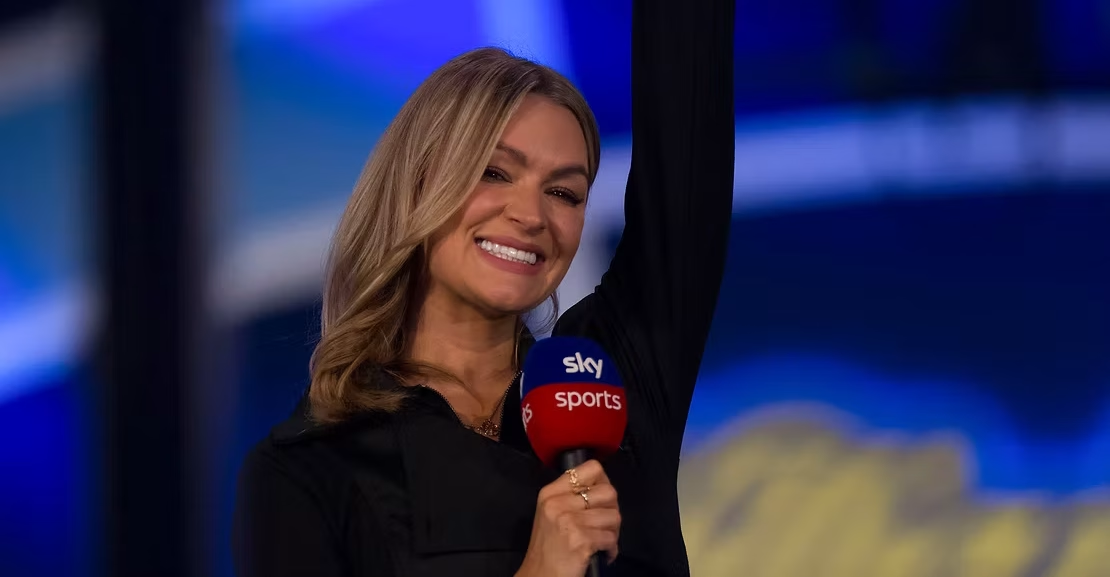
Laura Woods has offered a heartfelt look back at her extensive time immersed in the world of professional darts, revealing the one figure from the sport’s vibrant past whom she misses more than any other.
In a nostalgic and deeply personal reflection, the popular broadcaster described her years covering the sport as unforgettable, emotionally charged, and populated by larger-than-life personalities who helped turn darts into a global entertainment phenomenon. While the modern game thrives with new stars and record-breaking audiences, Woods’ thoughts frequently drift back to an era defined by raw charisma and unfiltered authenticity.
Woods rose to prominence as one of the most recognisable faces in darts broadcasting. For over a decade, she was a constant presence at the sport’s grandest stages. From the raucous, festive atmosphere of the PDC World Darts Championship at Alexandra Palace — where thousands of fans pack the venue in fancy dress, creating a party-like vibe — to the high-stakes drama of Premier League Darts nights across arenas in the UK and Europe, she witnessed the sport’s remarkable transformation firsthand.
What was once a niche pub game evolved into a slick, widely followed spectacle, drawing millions of viewers worldwide and cementing its place in mainstream British sports culture.
Despite the undeniable success of today’s generation and the sport’s continued growth, Woods has been candid about the one absence that stands out above all. Among the countless champions, contenders, and colourful characters she encountered, it is the legendary Eric Bristow who lingers most vividly in her memory.
The five-time world champion, affectionately known as “The Crafty Cockney,” embodied the bold, entertaining spirit that helped propel darts into the spotlight during its formative years of wider popularity.
Bristow’s influence extended far beyond his on-stage achievements. His swagger, quick wit, and larger-than-life persona made him a natural focal point wherever he went. Woods has spoken warmly on multiple occasions about how Bristow’s presence could light up a room — or an entire arena.
He wasn’t just a dominant player who won his first world title in 1980 and went on to claim four more; he was a showman who brought attitude, humour, and unpredictability to every interaction. In an era when darts was still fighting for broader acceptance, Bristow helped shape its identity as much through personality as through precision throwing.
One anecdote Woods has shared captures Bristow’s essence perfectly. Early in her career covering the sport, after he learned of a personal challenge she was facing, Bristow responded in his trademark blunt, Cockney style. With a glint in his eye, he jokingly declared he would “break his legs” — a reference to dealing with the individual involved.
Delivered with characteristic dark humour, the comment left a lasting impression. Woods later laughed about the exchange, recognising it as classic Bristow: direct, protective in his own way, and impossible to forget. These moments, she reflects, highlighted the unique camaraderie and unfiltered nature of the darts world at that time.
The broadcaster emphasises that Bristow represented something special — an era where the characters were every bit as important as the results. Darts has always thrived on its blend of intense competition and entertainment, but in Bristow’s heyday, the balance felt particularly potent.
Players were accessible, interactions with media and fans carried a raw authenticity, and the lines between sport and spectacle were joyfully blurred. Woods believes this spontaneous charm, fostered by personalities like Bristow, created an atmosphere that is challenging to replicate in today’s more polished, globally scaled professional environment.
Of course, Woods is quick to praise the current crop of talent. She has highlighted the meteoric rise of teenage sensation Luke Littler, whose emergence captivated audiences and injected fresh excitement into the game. She also acknowledges the dominance of established stars such as Michael van Gerwen and Luke Humphries, who continue to push the sport to new heights with their skill and dedication.
The modern game benefits from superior facilities, increased prize money, sophisticated training methods, and a truly international platform. Arenas across Europe sell out regularly, social media amplifies every dramatic moment, and viewership figures have soared.
Yet, for all these advancements, Woods senses that something intangible from the earlier days has diminished. The connections between players, presenters, and officials once felt more intimate and unscripted. Late-night conversations, unfiltered banter in the press areas, and the sheer force of personalities like Bristow contributed to a special magic.
Bristow, who tragically passed away in 2018 at the age of 60, left behind not only an extraordinary legacy on the oche but also a mentoring influence on younger players. Many of today’s top professionals credit figures from that golden generation with helping to professionalise and popularise the sport.
Woods’ own journey in darts saw her become a trusted guide for viewers around the globe. Positioned at the heart of major events, she narrated unforgettable matches, dramatic comebacks, and tear-jerking finishes. Her warmth and professionalism helped humanise the athletes behind the arrows, making the drama accessible to casual fans and die-hard supporters alike.
Even after stepping back from regular darts presenting duties, she has stayed connected to the sport through discussions, interviews, and personal reflections. She remains genuinely appreciative of darts’ evolution while mourning the loss of that earlier, more intimate energy.
Bristow’s enduring appeal in Woods’ recollections goes beyond skill or titles. It lies in the feeling he brought — the confidence, the unpredictability, the humour, and the authoritative presence that defined an entire chapter of darts history. In her view, such figures are not easily replaced. They become part of the sport’s folklore, shaping its culture long after their playing days or, in Bristow’s case, their lives have ended.
As darts continues its upward trajectory — breaking viewing records, attracting younger audiences, and expanding globally — Woods’ reflections serve as a poignant reminder. The sport’s growth is something to celebrate, yet its soul remains deeply tied to the colourful personalities who built its foundations.
For Laura Woods, the memories of roaring crowds at Alexandra Palace, electric Premier League nights, and the irreplaceable Crafty Cockney remain treasured highlights of her broadcasting career.
While new champions rise and the game marches forward, certain icons occupy a permanent place in the hearts of those who experienced their era up close. Eric Bristow is one such figure. For Woods, and for many others who loved the sport in its more unfiltered days, he is the one they miss most — a symbol of an unforgettable time when personality and prowess combined to create something truly special.
Darts moves on, but the legacy of its past giants endures, ensuring that the emotional connection to its history remains as strong as ever.
