
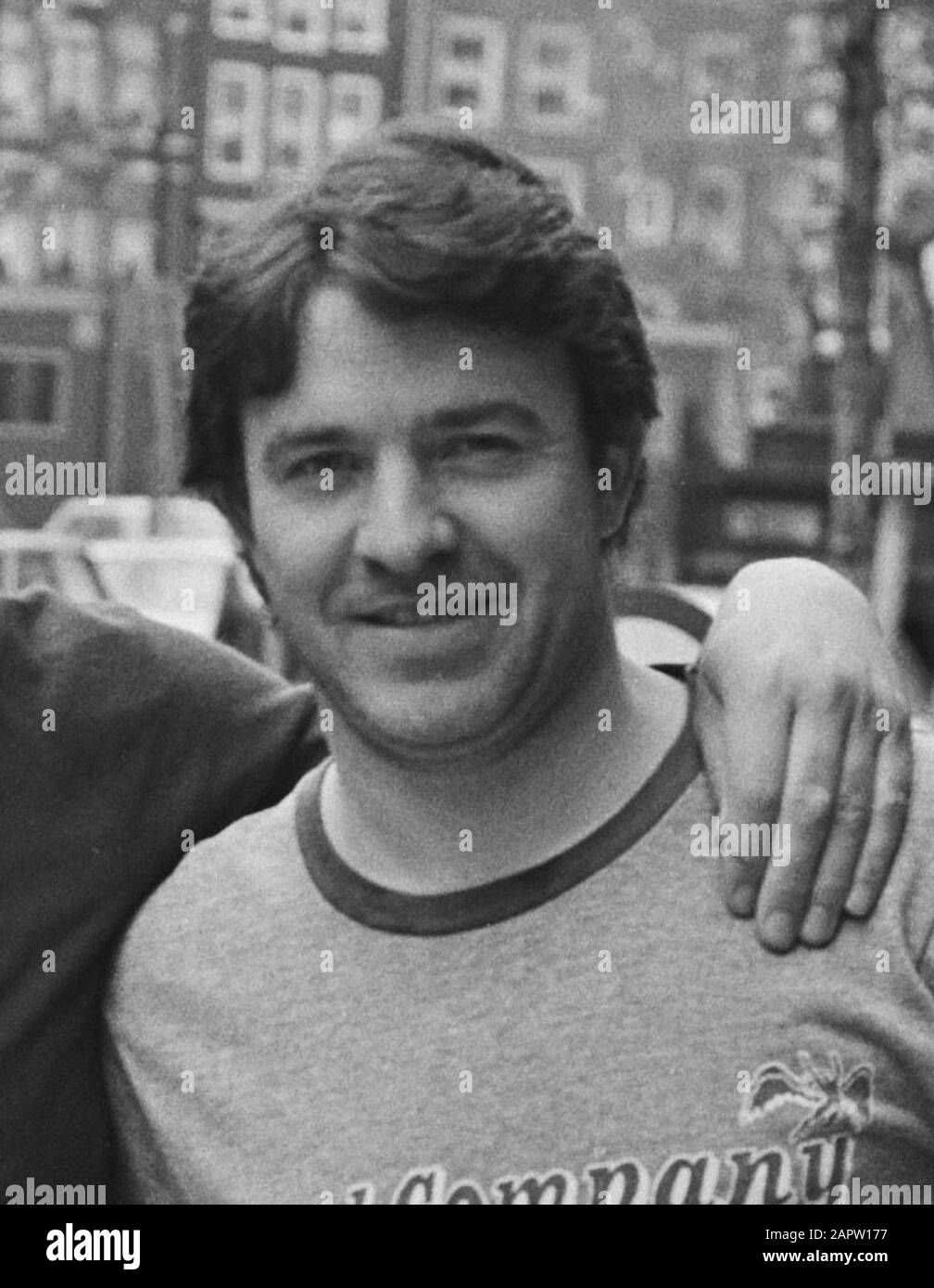
‘We’ve got a little fat guy who will turn him inside out’ – the genius of Robertson: John Robertson, who has passed away at the age of 72, occupied a rarefied corner of football history, a place reserved for players whose influence defies mere statistics. Brian Clough, never one to waste words on exaggeration, once christened him “the Picasso of our game.” It was not flattery. It was diagnosis.
Before Clough’s arrival at the City Ground in January 1975, Robertson drifted on the margins overlooked, underappreciated, disguised beneath a perpetually dishevelled exterior. What Clough uncovered was not raw potential, but dormant genius. Once released, it reshaped Nottingham Forest’s destiny. Robertson became the creative pulse of a side that would dominate English and European football in the late 1970s and early 1980s.
Operating from the left flank, he was the quiet architect of Forest’s astonishing ascent. In the 1977–78 season, newly promoted and utterly fearless, Forest claimed the First Division title and the League Cup. Among a team brimming with characters and talent, Robertson stood apart. He did not shout. He did not sprint. He orchestrated.
That triumph was merely a prologue.
In 1979, Forest conquered Europe, defeating Malmö in the European Cup final. The winning moment bore Robertson’s fingerprint a perfectly weighted cross from the left, met by Trevor Francis’ decisive header. Twelve months later, on the grand stage of the Bernabéu in Madrid, he authored the defining act himself, scoring the goal that toppled SV Hamburg and secured a second consecutive European crown. Two finals. Two decisive contributions. No coincidence.
Yet Robertson’s story is not solely gilded with trophies. He stood at the heart of one of English football’s most painful schisms: the rupture between Brian Clough and Peter Taylor in 1983. Taylor, then managing Derby County, signed Robertson without informing Clough, leaving the fee to be settled by tribunal. For Clough, it was a betrayal too deep to mend. The silence between the two men endured until Taylor’s death in 1992, a wound Clough carried with lasting regret.
Clough often teased Robertson’s unpolished appearance and was well aware of his fondness for cigarettes. None of it mattered. What mattered was the sorcery that followed when the ball touched his boots. Two-footed, unhurried, devastatingly precise, Robertson hugged the touchline like a craftsman at his bench, delivering crosses with metronomic accuracy and arriving unannounced to score goals that altered seasons.
Robertson had represented Scotland at schoolboy and youth levels before joining Forest as a teenager in 1970. For years, little came of it. Others might have given up. Clough did not. In his autobiography, he recalled seeing past the surface: an unlikely athlete, scruffy and seemingly indifferent, yet worth every ounce of patience. What emerged was one of the finest distributors of a football he had ever known.
Clough wrote with typical theatrical bite, comparing himself to Errol Flynn beside Robertson’s weary presence, but adding the essential truth: give Robertson a yard of grass and a ball, and he transformed into an artist. The nickname endured because it fitted.
The admiration flowed both ways. Robertson idolised Clough without embarrassment. He later admitted his career would have been unthinkable without him. Between December 1976 and December 1980, Robertson played 243 consecutive matches a testament not to athletic bravado, but to indispensability. Even alongside celebrated signings like Peter Shilton and Trevor Francis, Britain’s first £1m footballer, Forest revolved around Robertson’s rhythm.
In that title-winning 1977–78 campaign, his influence was everywhere, capped by a moment of nerve and steel as he converted the winning penalty against Liverpool in the League Cup final replay at Old Trafford.
Those who played with him understood his value. Martin O’Neill described him as the most influential player in Europe for nearly four years. Captain John McGovern offered a comparison both flattering and revealing: like Ryan Giggs, but with two equally trustworthy feet.
Robertson himself was disarmingly honest about his limitations. He lacked pace. He could not tackle. Clough did not care. He granted Robertson freedom, absolving him of duties that dulled his brilliance. It was a partnership of eccentrics, perfectly aligned.
Ahead of the 1980 European Cup final against Hamburg, Clough was asked whether the formidable Manfred Kaltz could nullify Robertson. Clough’s reply was vintage and prophetic: Forest had “a little fat guy” who would turn him inside out. That night, Robertson did exactly that cutting inside, exchanging passes with Garry Birtles, and striking from 20 yards with his right foot to decide the final within 20 minutes.
His Forest legacy is etched in silverware: a league title, two European Cups, two League Cups. In total, he made 386 appearances and scored 61 goals. His later move to Derby County is remembered less for footballing feats than for the irreversible damage it caused between Clough and Taylor. By then, Robertson’s zenith had passed. A return to Forest in 1985 proved fleeting and unfruitful.
On the international stage, Robertson earned 28 caps for Scotland, appearing at the World Cups of 1978 and 1982. He scored eight times for his country, including what he considered his finest goal a calmly dispatched penalty against England at Wembley in 1981 and another at the 1982 World Cup against New Zealand.
In later years, he returned to the game as a trusted lieutenant to Martin O’Neill, joining his backroom staff at clubs including Wycombe Wanderers, Norwich City, Leicester City, Celtic and Aston Villa.
Ultimately, John Robertson will be remembered not for his speed, physique, or glamour, but for something rarer. Under Brian Clough’s mercurial stewardship at the City Ground, he played football as an act of expression. His team-mates called it genius. History agrees.

1 Comment
Pingback: Diego Maradona: Obituary - Argentina's flawed football icon - bazelive.com