
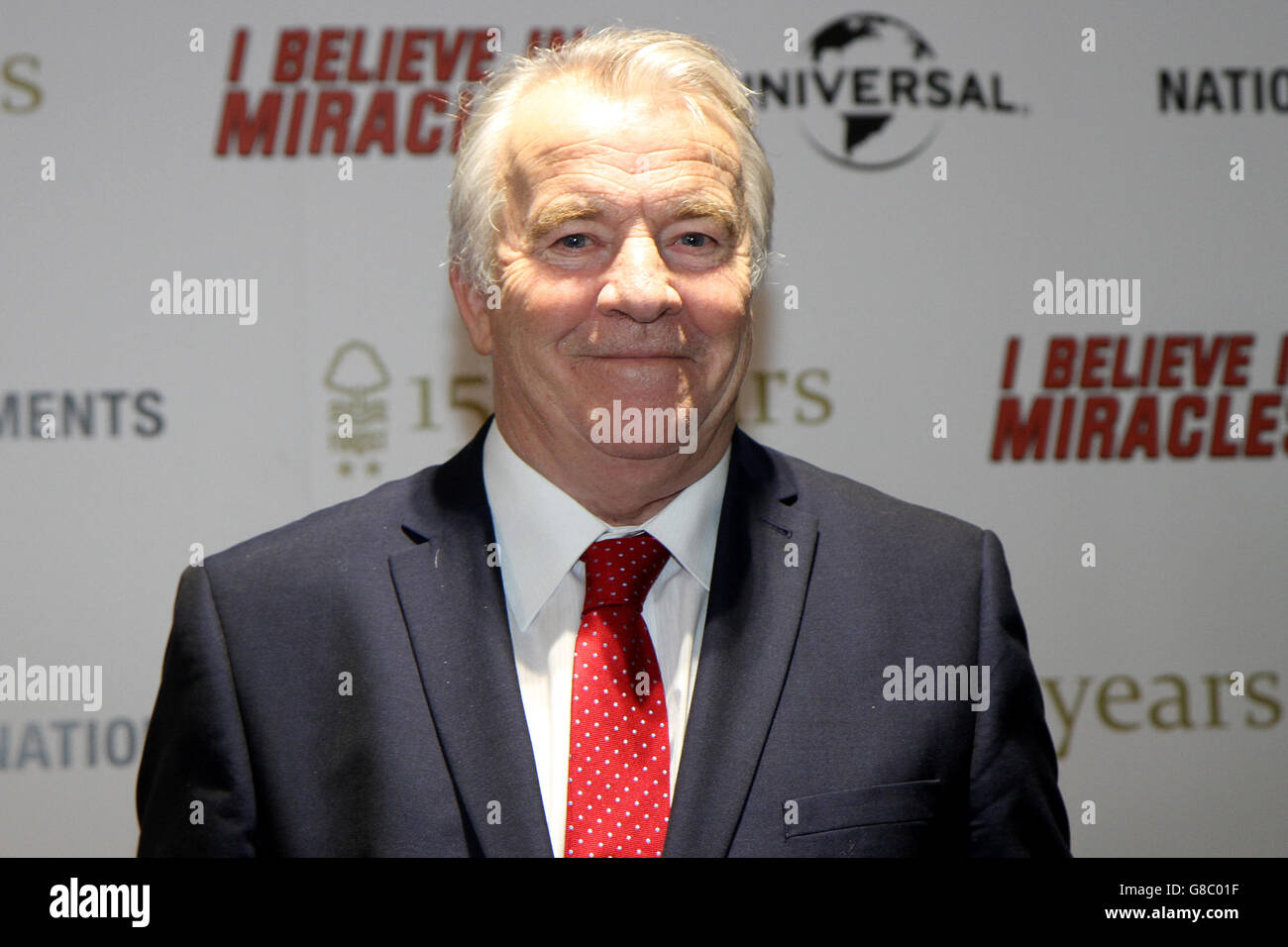
‘Picasso’ of football Robertson dies aged 72: John Robertson, the former Scotland international and wide man of Nottingham Forest and Derby County, has passed away at 72, leaving behind a legacy sketched not in noise but in nuance. Brian Clough once christened him “a Picasso of our game,” a line that clung because it fit Robertson was a creator who worked in angles and timing, not applause.
- Dyche urges ‘common sense’ and won’t weigh players
- Sheffield United: Saudi Prince threatened new Blades owners with liquidation over £10m debt
His most indelible brushstrokes came on Europe’s grandest canvas. In 1980, it was Robertson who supplied the solitary goal as Nottingham Forest defended the European Cup against Hamburg. A year earlier, he had curved the telling delivery that allowed Trevor Francis to settle the final against Malmö. Two finals, two decisive moments quiet authority rendered decisive.
For Scotland, his contributions carried the same steel beneath the silk. He struck the winning goal against England in 1981, then found the net again versus New Zealand at the 1982 World Cup finals. By the time his international career closed, Robertson had gathered 28 caps, each earned through reliability rather than spectacle.
When his boots were finally set aside, Robertson moved seamlessly into the shadows of management, serving as assistant to his former Forest ally Martin O’Neill. Together they traversed Wycombe Wanderers, Norwich City, Leicester City, Celtic, and Aston Villa an apprenticeship that valued diligence over drama.
His autobiography, Supertramp, published in 2012, revisited Clough’s famously abrasive first appraisal “a scruffy, unfit, uninterested waste of time” before the transformation. Under Clough’s exacting eye, Robertson became, in the manager’s own words, “one of the finest deliverers of a football I have ever seen,” comparable with the craftsmen of Brazil or Italy. From indifference to indispensability, the metamorphosis defined him.
Forest captain John McGovern offered a comparison equally revealing: “like Ryan Giggs but with two good feet, not one,” and, he insisted, even greater aptitude. Praise, in this case, was not inflation.
Raised in Viewpark, North Lanarkshire, Robertson honed his trade with Drumchapel Amateurs and represented Scotland at youth level before signing for Forest in May 1970. His senior debut followed later that year. Though briefly listed for transfer prior to Clough’s arrival in 1975, Robertson’s fortunes pivoted sharply thereafter. Between December 1976 and December 1980, he appeared in an extraordinary 243 consecutive matches, becoming an iron constant in a golden side.
Among his domestic highlights was the 1978 League Cup final replay, where he converted the winning penalty against Liverpool calm execution under ferocious scrutiny. Yet his departure in 1983, sold to Derby County for a disputed fee, fractured the famed Clough–Peter Taylor partnership. Football’s triumphs often exact private costs.
An early injury blunted his momentum at Derby. A return to Forest in 1985 could not rekindle former fluency, and his playing days wound down through non-league spells at Corby Town, Stamford, and Grantham Town an unglamorous coda embraced without complaint.
Robertson’s Forest honours remain resplendent: First and Second Division titles, the Uefa Super Cup, two League Cups, the 1978 FA Charity Shield, and the Anglo-Scottish Cup. In 2015, supporters affirmed what silverware already suggested, voting him their favourite Forest player of all time in a Nottingham Post poll.
As O’Neill’s lieutenant, his coaching achievements were equally substantial. Wycombe climbed from the Conference and Third Division; Leicester rose to the top flight and lifted the League Cup. Then came a richly decorated era at Celtic, where they claimed three Scottish Premier League titles, three Scottish Cups, a League Cup, and advanced to the Uefa Cup final. His final campaign in coaching, with Aston Villa in 2010, concluded with a runners-up finish in the League Cup.
John Robertson was never loud, never ornamental. He preferred the uncelebrated work the measured cross, the unerring pass, the moment that tilts a final. In an age hungry for spectacle, he proved that craft, applied faithfully, can still change history.
