
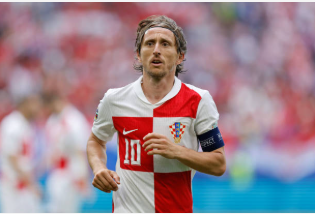
From goat herding to idol – Modric’s ‘underdog’ rise to the top: No matter how Croatia’s Euro 2024 story concludes, Luka Modric has no intention of quietly closing the book on his international journey. Retirement, at least from the national shirt, is not yet part of his vocabulary.
- Lamine Yamal Biography: Age, Parents, Height, Salary & Net Worth
- Cristiano Ronaldo: I’m the best player in the world
- ‘We’ve got a little fat guy who will turn him inside out’ – the genius of Robertson
At 38, the Real Madrid midfielder still harbors a restless ambition: one more World Cup, one more chapter, one more extension of a record already etched in stone. With 177 appearances and counting, Modric’s presence in Croatian football has long transcended numbers. He is not just a player; he is an institution.
Yet football is rarely sentimental. As Croatia approach their decisive Group B encounter with Italy, the arithmetic is unforgiving. Victory is essential. Anything less would invite an avalanche of conjecture, whispers that this could be Modric’s final act in the chequered red and white regardless of his own resolve to continue.
Captain since August 2016, Modric occupies a space in Croatia that few athletes ever reach. In a young nation that venerates its sporting icons, he stands tallest. His greatness feels intertwined with the country’s own modern history, as if his ascent mirrors Croatia’s struggle, resilience, and eventual self-definition on the world stage.
And the journey, improbably, is still unfolding.
To understand the reverence surrounding Modric, one must look beyond stadiums and trophies and instead walk the streets of Zadar, the coastal city of his childhood. There, admiration borders on folklore. During a recent visit, a local resident summed it up with disarming certainty: Modric should run for president. No rival, no contest. A figure like him, they insist, appears once in a century.
His rise was anything but preordained. The path from the barren hamlet of Modrici, nestled near the Velebit mountains, to the summit of world football was steep, unpaved, and cruel. As a five-year-old, Luka herded his grandfather’s goats across inhospitable land, honing his touch not on manicured pitches but on stubborn stone and dust. Hours were spent alone, striking a ball against the entrance of a garage attached to the modest home shared by his family and grandparents.
Tragedy lived just metres away. Near that same garage door, his grandfather was killed in the early days of Croatia’s war of independence. From a landscape shaped by loss and displacement emerged a frail, pencil-thin boy who would later defy every physical stereotype attached to greatness.
When war engulfed the region, Modric’s family fled after their home was burned and his grandfather executed by Serbian rebels. The next seven years were spent as refugees in Zadar, living in hotels where childhood unfolded under the shadow of conflict. Football became both sanctuary and escape. Matches were improvised in car parks, rules flexible, joy essential. In later years, Modric would note that in photographs from that time, a ball was almost always by his side an extension of himself.
Formal schooling gave way to football education at Zadar’s academy, before a pivotal move to Dinamo Zagreb at 16. In hindsight, many claim the signs were obvious, the talent unmistakable. The truth is less romantic. Modric was doubted at every turn. Too small. Too slight. Too fragile for the brutality of professional football.
Dinamo loaned him to Zrinjski Mostar in Bosnia, where development came wrapped in bruises. Matches were unforgiving, tackles unrestrained. Officially, it was about toughening him up. Unofficially, questions lingered about whether he would ever truly make it.
This cycle of skepticism became a recurring theme. After Bosnia came another loan, this time to Inter Zapresic. Only later, back at Dinamo, did his influence crystallize. Over four seasons he delivered goals, assists, and authority enough to attract Europe’s elite. Barcelona, Arsenal, Chelsea all watched. Tottenham moved first.
His £16.5m switch to Spurs in 2008 made him the club’s record signing, but England greeted him with familiar doubt. The Premier League, critics said, would expose him. He was too light, too delicate. Again, Modric endured. Again, he prevailed.
When Real Madrid arrived four years later, it was merely another proving ground. Delayed negotiations cost him pre-season, and competition was fierce. Xabi Alonso. Mesut Ozil. A demanding Jose Mourinho. By season’s end, Spanish daily Marca ran a poll in which Madrid supporters voted him the club’s worst foreign signing ever. The ridicule was sharp, personal, and public.
He responded the only way he ever has by playing football that gradually redefined matches. Mourinho recognized his ability to disrupt pressing systems, to fracture Barcelona’s suffocating style with a single turn or disguised pass. Modric became the antidote to modern suffocation. From there, his stature soared.
Twenty-six trophies later, including four La Liga titles and six Champions Leagues, he confronts a different challenge: time. His role has shifted, minutes rationed, impact concentrated. Carlo Ancelotti was transparent about it. Modric resisted at first, sulked even. But he adapted. Now he enters games like a surgeon at the critical moment, changing outcomes in the final breaths.
Real Madrid hesitated, as they often do with players past 30. Then they renewed him. Despite lucrative offers from MLS and Saudi Arabia, Modric stayed. The Bernabeu, he has always said, is where he wants the final curtain to fall.
With Croatia, his role is freer, less regimented. He floats rather than anchors, guided by instinct rather than instruction. Teammates describe him as a silent leader authority without noise, influence without theatrics.
After the 2018 World Cup, many of his peers stepped aside, choosing club longevity over international duty. Modric never considered it. His bond with the national team is deeper, almost sacred. He does not need goals or assists to dominate a match. His gravity alone reshapes it.
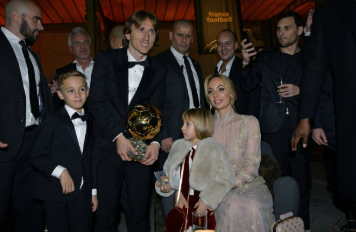
Off the pitch, he remains intensely private. Family-centered. Reserved. Proud, but never performative. The past is acknowledged, not dwelled upon.
There is, inevitably, a shadow. In 2018, he was charged over alleged false statements in a tax fraud case involving Zdravko Mamic. The charges were dropped on the eve of the World Cup. Croatia reached the final. Modric won the Golden Ball. The episode left scars, but it did not define him.
Through triumph and turmoil, Modric has given Croatia more than silverware. He has given it identity. Proof that a small nation can produce something monumental.
Picture the night he won the Ballon d’Or. Imagine his father’s pride. The world’s best footballer his son. The same boy who once herded goats on unforgiving mountain paths near Zadar.
Luka Modric. Son of Croatia.
