
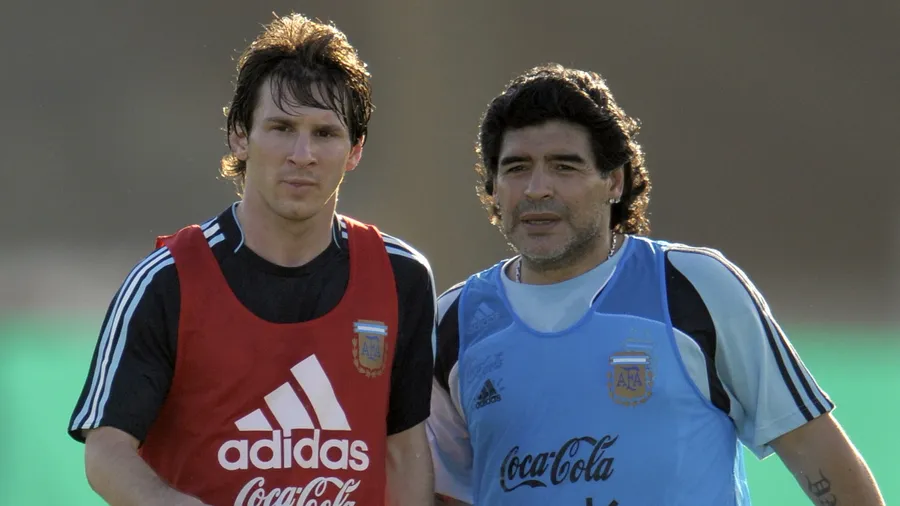
Diego Maradona: Obituary – Argentina’s flawed football icon: Dazzling. Notorious. Preposterously gifted. Diego Maradona remains a contradiction wrapped in genius. A footballing marvel whose brilliance illuminated stadiums, and whose missteps cast long, stubborn shadows.
- ‘We’ve got a little fat guy who will turn him inside out’ – the genius of Robertson
- The Lionel Messi Biography
Few players have ever fused imagination with audacity the way the Argentine did. His game was a cocktail of velvet touch, impish invention, telescopic vision and sudden acceleration. Crowds didn’t just watch him; they leaned forward, bracing for something improbable. And then, just as easily, he would provoke outrage none more infamous than the illicit nudge of destiny known as the “Hand of God” while his private life unravelled into addiction and turmoil beyond the white lines.
Short and Sweet The Football Savant
Born six decades ago amid the corrugated iron and dust of a Buenos Aires shanty town, Diego Armando Maradona clawed his way out of scarcity to claim a throne in world football. To many, he did more than rival Pelé; he eclipsed him.
Across 491 professional appearances, he struck 259 times, numbers impressive yet insufficient to explain his aura. When a global poll crowned him Player of the 20th Century, FIFA hastily amended the rules so that both South American titans could share the accolade an uneasy truce between legends.
Prodigy scarcely does him justice. As a teenager, Maradona guided Los Cebollitas through a scarcely believable 136-match unbeaten run. At just 16 years and 120 days, he pulled on the Argentina shirt, already carrying the weight of expectation with a boyish grin.
Compact, stocky, barely 5ft 5in, he looked ill-suited to athletic archetypes. Yet his molten close control, slaloming dribbles, feathered passes and spatial awareness compensated for every perceived shortcoming, even when fitness wavered. He could humiliate defenders with ease—escaping personal demons, however, proved far trickier.
Hand of God and Goal of the Century
Statistics skim the surface of Maradona’s international odyssey. His 34 goals in 91 caps tell only fragments of a saga that peaked spectacularly in Mexico, 1986, where he hauled Argentina to World Cup glory and returned them to the final four years later.
The quarter-final against England in ’86 simmered with more than sporting rivalry. The Falklands War, still raw in memory, sharpened every tackle and glare. With the score locked at 0–0, Maradona leapt alongside Peter Shilton and nudged the ball home with a clenched fist. Infamy was born.
He later framed it as divine mischief “a little with the head of Maradona and a little with the hand of God.”
Four minutes on, redemption or perhaps escalation arrived. Gathering possession deep in his own half, he weaved through a phalanx of defenders like smoke through alleyways, rounded Shilton, and finished calmly. One run. One goal. Immortality.
“You have to say that is magnificent,” declared commentator Barry Davies. “That was just pure football genius.”
England rallied but fell short. Argentina advanced, and Maradona admitted it felt like more than victory; it was symbolic retribution.
Naples, Adoration, and the Poisoned Chalice
Maradona shattered the world transfer record twice first leaving Boca Juniors for Barcelona in 1982, then swapping Spain for Naples two years later. His helicopter arrival at the Stadio San Paolo drew over 80,000 worshippers. A city crowned him king before he kicked a ball.
Italy witnessed the finest club football of his life. Under his spell, Napoli captured their first league titles in 1987 and 1990, plus the UEFA Cup in 1989. Celebrations for the initial triumph raged for five days, flooding the streets with delirium.
Yet adoration became suffocating. “This is a great city, but I can hardly breathe,” he confessed. “I want to walk freely. I’m just a lad.”
Entanglements followed links to the Camorra, a spiralling cocaine dependency, and a paternity battle. Defeat to West Germany in the Italia ’90 final was followed by a failed drugs test and a 15-month suspension that punctured his reign.
He returned, briefly steadied himself, and earned a place at the 1994 World Cup in the United States. But the calm was illusory. A wild, unsettling celebration into a pitch-side camera preceded his expulsion from the tournament after testing positive for ephedrine.
Life Beyond the Touchline
On his 37th birthday, following a third positive test, Maradona bowed out of professional football. Chaos, however, refused to release its grip.
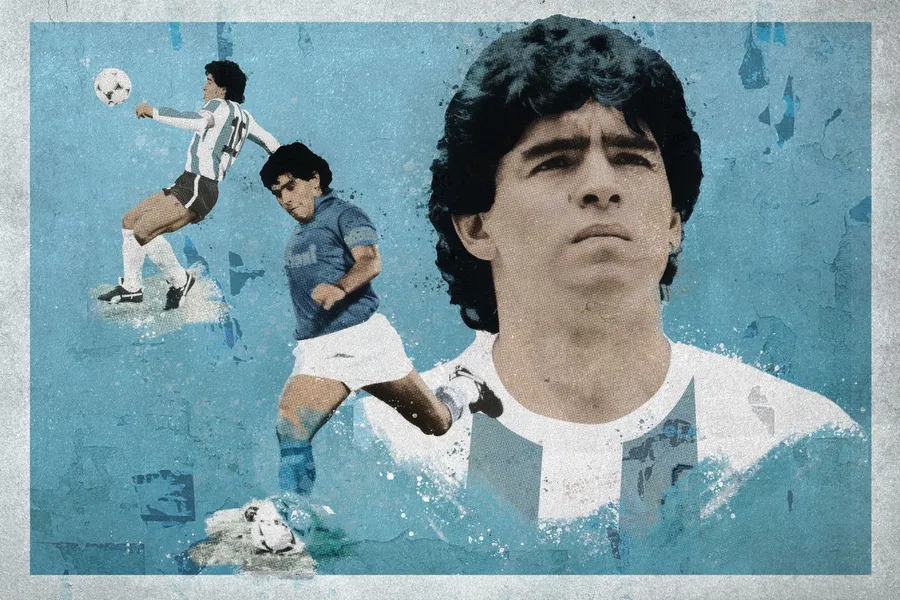
A suspended prison sentence stemmed from an earlier incident involving journalists and an air rifle. Years of substance abuse ravaged his health. His weight ballooned to 128kg, and in 2004 a severe heart attack landed him in intensive care. Gastric-bypass surgery followed, along with a period of exile in Cuba as he fought to reclaim control.
Against expectation, Argentina appointed him national team manager in 2008. He steered them to the World Cup quarter-finals in 2010, only for a brutal 4–0 defeat by Germany to end his tenure.
Coaching posts came and went, as did headlines. He required reconstructive surgery after a bite from one of his shar pei dogs. He publicly acknowledged his son, Diego Armando Junior, born from an extra-marital relationship.
Perhaps no single episode captured his volatility better than the 2018 World Cup in Russia. Maradona unfurled a banner bearing his own image, danced with Nigerian supporters, prayed skyward, erupted at Lionel Messi’s goal, drifted into sleep, then greeted Argentina’s second strike with an obscene double salute. Reports later hinted at medical attention.
Disgrace and inspiration. Theatre and excess. Grandeur and self-sabotage. Diego Maradona lived without moderation a footballing deity who turned life itself into a spectacle. A life, unmistakably, less ordinary.

1 Comment
Pingback: Cristiano Ronaldo: I'm the best player in the world - bazelive.com